A quick game does not have to be a game you can finish quickly
For this list, “ten-minute break” means the game reaches its real interaction without a long story setup. It does not promise that ten minutes is enough to solve every target or reach the final round. Normal Maths can keep a determined solver busy for much longer. OrmBlok’s official page describes an average session around half an hour. They still belong here because a short visit lets you test a rule, learn a tutorial or improve an early round without waiting for the game to reveal what it is.
Poor Bunny! is the cleanest fit if you need a complete attempt before the break ends. Scarlet Shift also works in short bursts because its wave-based survival loop begins immediately. Choose based on the action you want: reasoning, block placement, mouse-only shooting or fast platform survival. If you only have a trackpad and no room for rapid movement, the puzzle choices will be kinder than the shooters.
- Fastest complete runs: Poor Bunny!
- Best for one small deduction: Normal Maths
- Best for learning a layered arcade system: OrmBlok
- Best for a high-pressure mouse-only run: Scarlet Shift
Poor Bunny! gives you a whole run in one small arena
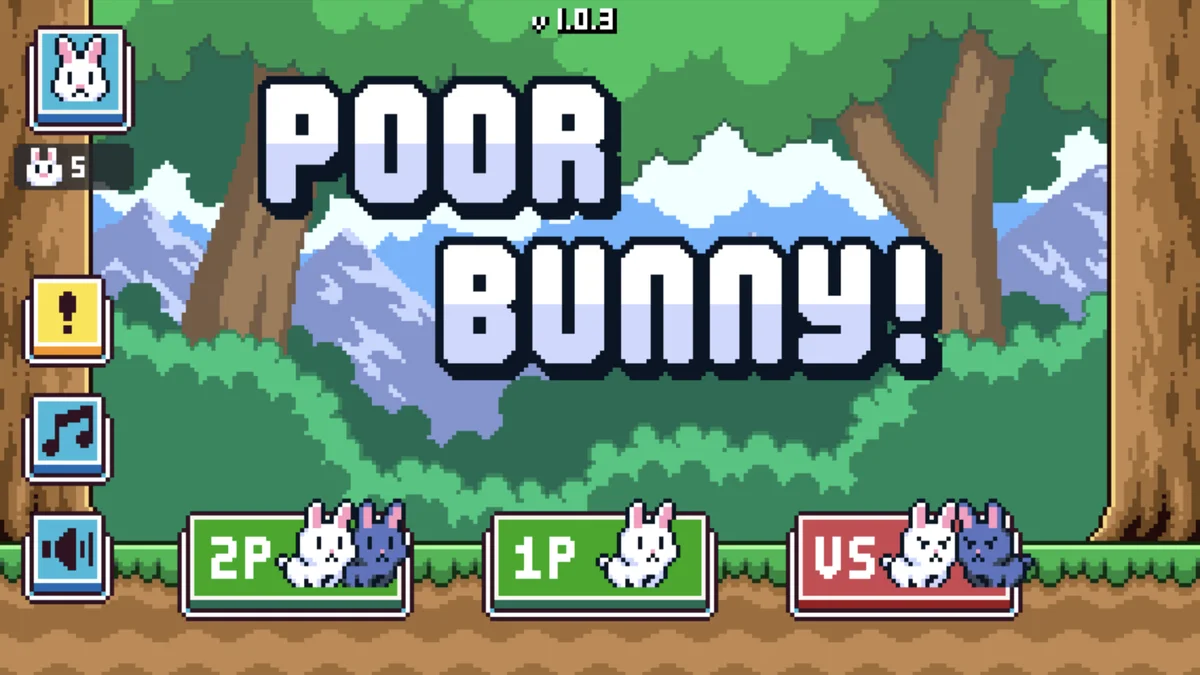
Poor Bunny! places a rabbit in a single screen, spawns carrots and begins filling the arena with traps. Every carrot raises the score; touching an arrow, saw or other hazard ends the run. There are no rooms to unlock before the main mechanic appears. Movement, greed and survival begin together, which is why the game is easy to recommend when the clock is visible beside you.
A golden carrot is worth five normal carrots and often appears where chasing it is risky. That choice gives each short attempt a useful shape: play safely for a modest score or cross a dangerous lane for a faster gain. The carrots also contribute to unlocking more than 100 bunny appearances, so even a failed run can move a second goal forward. On desktop, Player 1 uses WASD. A second local player uses the arrow keys in co-op or versus mode.
Pick the Poor Bunny! mode before you invite someone over
Single-player is the least complicated version and the best choice for a short solo pause. Co-op puts two bunnies in the arena and asks both players to survive and collect. Versus uses the same shared danger but turns carrots into a competition. Because both players use one keyboard, check that the device can recognize the needed simultaneous keys and that each person has enough room.
Do not spend the whole break chasing unlocks. Pick a smaller target: beat the previous score, collect one golden carrot without panicking, or survive long enough to see a new trap pattern. The arena becomes more crowded as the run continues, so improvement comes from keeping an escape lane open rather than standing under the next carrot. A single clear goal makes a five-minute attempt feel complete even when the rabbit does not last very long.
Scarlet Shift compresses movement, aim and health into the mouse
Scarlet Shift was made in 36 hours for a game jam and announces its premise with unusual directness: you are bleeding out. The game is controlled with the mouse, and the blood resource keeps shrinking while enemies arrive in waves. Defeated enemies drop blood, so attacking and moving toward the right pickups are part of staying alive rather than separate score-chasing tasks.
That loop becomes increasingly demanding. Player reports on the original release page describe later waves where blood drains quickly and upgrades determine whether recovery can keep pace. You do not need to reach those waves for a short session to work. The first few teach the important rhythm: keep moving, fire deliberately, collect blood before the reserve becomes an emergency and choose an upgrade that supports the way the run is unfolding. Expect flashy action and sustained gunfire rather than a calm pause.
Normal Maths is good for a break only if you define a small win
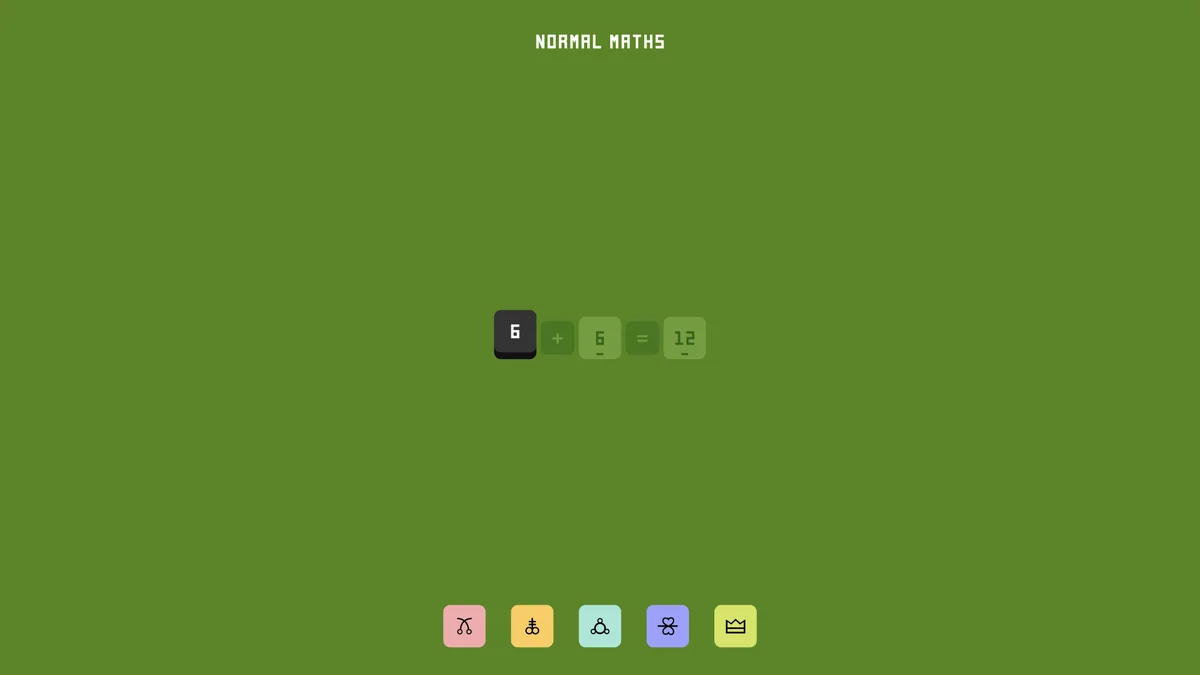
Normal Maths asks you to combine numbers with cryptic operation tiles. Click and drag a tile onto the path, watch how the number changes and use Backspace when you want to clear every placed tile. The full connected board has 18 targets. Solving all of them can take far more than ten minutes, especially before the operators make sense.
A better break-sized objective is to decode one symbol. Put it on the simplest available number path, compare the input and output, then test it again where the starting number differs. Write the rule down before closing the tab. That is genuine progress even if the large board remains unfinished. Avoid copying a complete solution image: it turns a compact deduction game into a placement chore and removes the moment when a strange mark becomes a predictable operation.
OrmBlok fits when you want to learn one phase at a time
OrmBlok looks like a falling-block game, but the blocks create pellets and shape a route for a worm that later enters the field to eat them. The built-in tutorials are the right first ten-minute session. They explain why leaving deliberate gaps can be better than making a perfect wall and how the block phase prepares the worm phase.
Use the arrow keys to move pieces and menu choices, X to confirm or rotate clockwise, Z to go back or rotate counter-clockwise and Enter to start or pause. A hard drop can be enabled from the start menu and then triggered with Up, but leave it off until normal placement feels comfortable. The full challenge aims for round nine and rewards risky scoring plans, so do not treat an early stop as failure. Learning why the worm could not reach a pellet is enough material for the next attempt.
Match the game to the way you need to stop
Poor Bunny! and Scarlet Shift end their runs clearly, which makes them easy to leave when the break is over. Normal Maths and OrmBlok can invite “one more test” because the unsolved rule or incomplete setup remains visible. If you know that an open puzzle will pull you past the deadline, choose a run-based game and stop at the next game-over screen.
Sound and input matter too. Poor Bunny! needs a keyboard, and local multiplayer needs shared space. Scarlet Shift asks for active mouse movement and can be tiring on a trackpad. Normal Maths works with mouse or touch and stays quiet in its demands. OrmBlok uses several keys but does not require rapid aiming. A useful short-break recommendation is not the game with the smallest download; it is the game whose stopping point and controls fit the room you are actually in.
A practical ten-minute plan
Spend the first minute choosing and loading, the next seven playing, and the last two finishing the current attempt instead of starting another. In Poor Bunny!, finish the run. In Scarlet Shift, stop after the current wave or game over. In Normal Maths, record the operator you decoded. In OrmBlok, finish the current tutorial step or round.
The schedule sounds strict, but it prevents a quick game from turning into a vague hour of tab switching. Each pick can hold attention longer when you have the time; none makes you wait through an extended prologue before touching its real idea. Pick one small objective, play it cleanly and leave the larger challenge for a session when the clock is not part of the obstacle design.
 Play now