Weird is useful when the game still gives you something to do
A strange premise is easy to write and hard to turn into a good game. The picks here work because the odd idea changes the decisions you make. BLOODMONEY! turns a clicker into a moral bargain. Normal Maths gives you familiar numbers but refuses to explain its operators. OrmBlok combines falling pieces with a worm that must travel through the field you just built. None of those games relies on a strange screenshot alone; the weirdness lives in the rule you repeat.
You notice the difference after the first surprised laugh. A novelty page has nothing left to ask; a proper small game still has an unseen ending, an undecoded operation, a higher round or a route through a puzzle room. We also favored games that state their controls clearly and reach their main idea without a long introduction.
- For a choice-heavy story: BLOODMONEY! or HUMAN EXPENDITURE PROGRAM
- For a compact logic mystery: Normal Maths
- For an arcade system you can keep learning: OrmBlok
- For point-and-click horror: Teeth of Glass
- For a playful public-domain platformer: Super Willie World 2
BLOODMONEY! makes one simple click increasingly difficult to justify
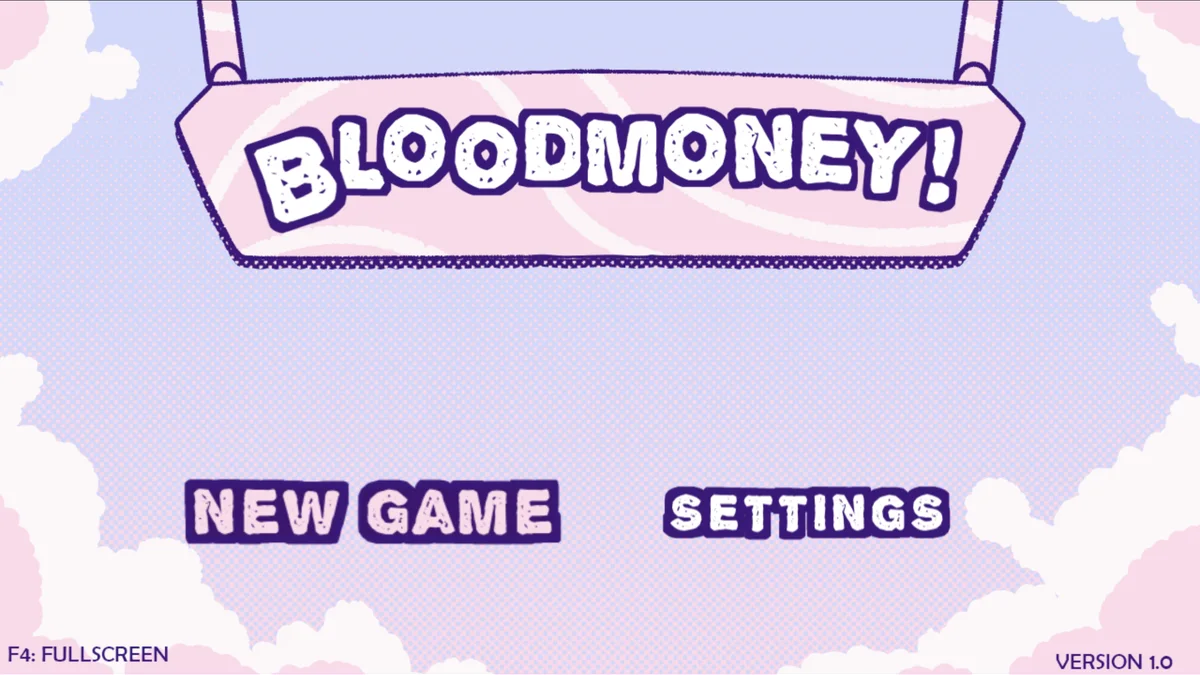
BLOODMONEY! begins with an urgent and legible problem: you need $25,000 for an operation. Harvey Harvington offers one dollar whenever you click him. The first action looks like the harmless engine of a standard clicker, but the shop soon offers ways to increase the payout by hurting him. The stronger the tool, the faster the total rises and the harder it becomes to pretend that the number is the only thing that matters.
The pastel art and cheerful salesman performance keep the interface friendly while Harvey’s reactions make the cost harder to ignore. Three endings give the first run a real consequence and make restraint a possible play style, rather than a failure to buy the strongest upgrade. The original release describes a run as roughly half an hour, which is enough time for the bargain to change without stretching one joke past its limit. Read the flashing-lights and violence note before starting.
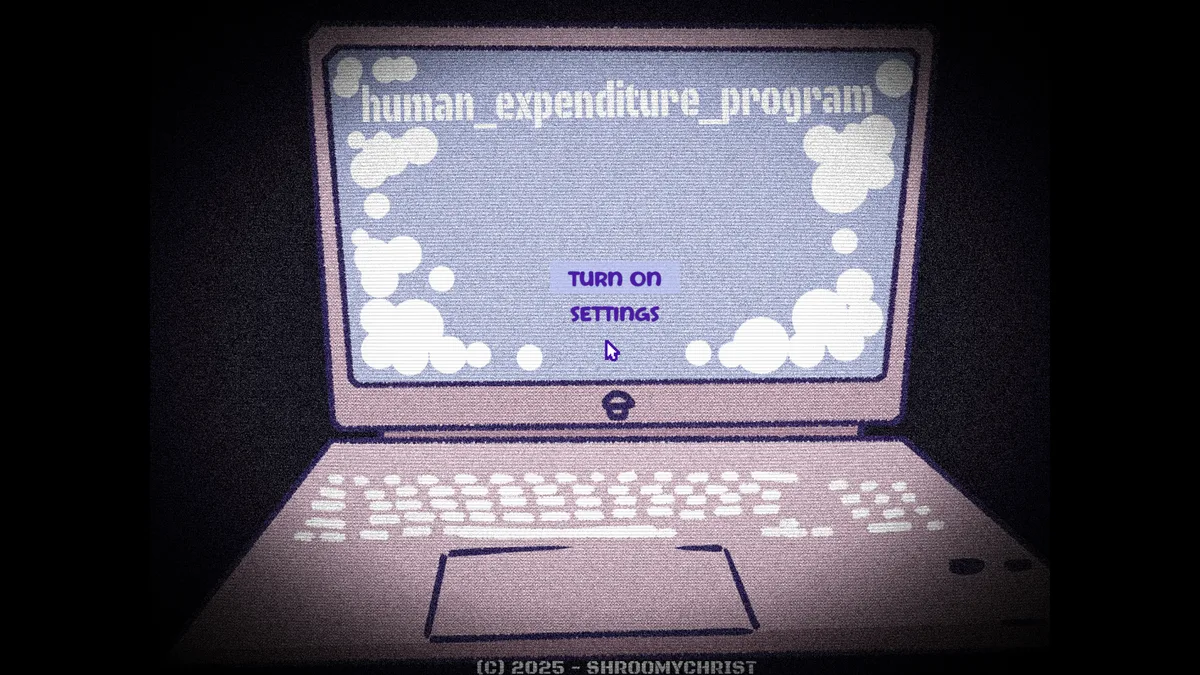
HUMAN EXPENDITURE PROGRAM turns the aftermath into a virtual pet
The official follow-up, often searched as BLOODMONEY 2, does not simply repeat the roadside stall. HUMAN EXPENDITURE PROGRAM places Harvey inside a computer program and hands you control over his care. You can feed him, pet him and play with him. The program promises money and a personal Harvey of your own, but it also asks what it means to own a person who has thoughts, feelings and a history with the player.
Five minigames make the follow-up busier than the first game, while two endings keep responsibility and memory at the center. The official description openly reminds the player that earlier actions cannot be undone, then suggests that forgetting might make everything fine. The cheery sales pitch makes that suggestion worse. Play BLOODMONEY! first if you want the intended context; the follow-up assumes that Harvey and the earlier bargain already mean something to you. It also carries an explicit photosensitivity warning.
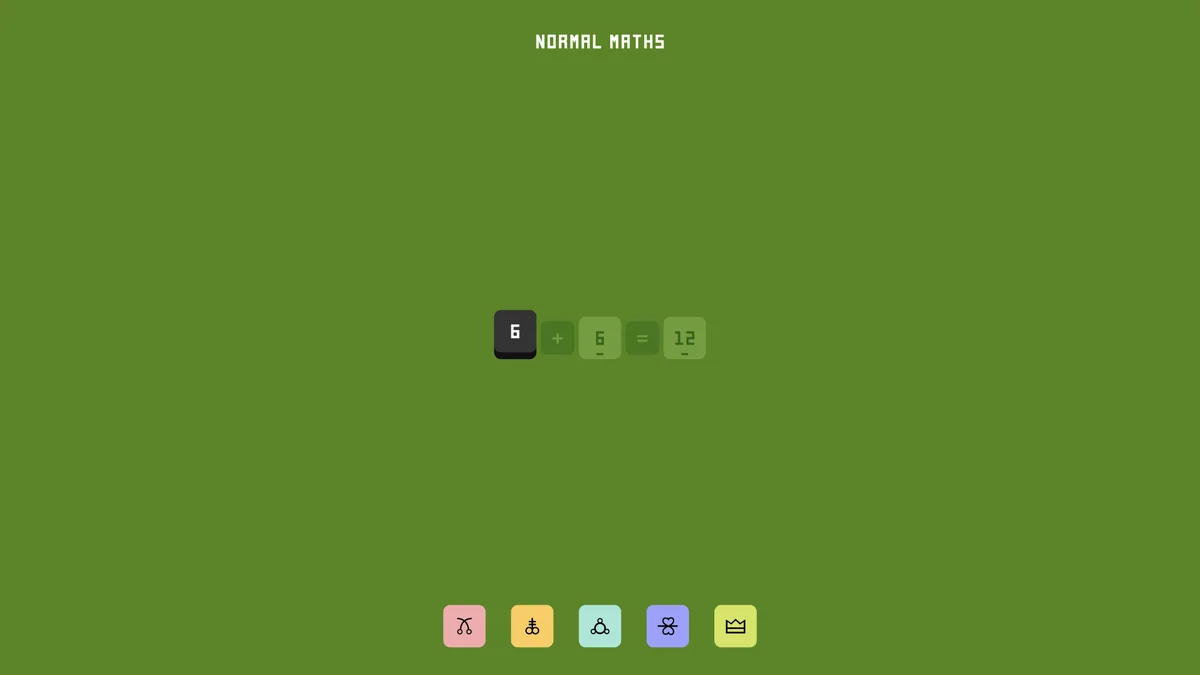
Normal Maths makes recognition feel like discovery
Normal Maths is visually quiet: numbers, paths and operation tiles on a shared board. The operators are the strange part. Instead of giving you ordinary addition and multiplication, the game asks you to infer what each symbol does by observing how a number changes. Click and drag a tile into place, test the result, and press Backspace when you want to clear the arrangement and try again.
The larger board contains 18 targets, and a solution has to work across connected paths rather than treating every target as an isolated equation. The shared board gives the tiny presentation surprising staying power. Test one operator against a short, simple path first and record the input and output. Guessing across the entire board creates noise; a small experiment gives you a rule you can use elsewhere. The reward is the moment an unfamiliar symbol finally becomes readable.
OrmBlok rewards the gaps a normal block game teaches you to avoid
OrmBlok was created in GB Studio for a Game Boy competition, and its two-part loop is specific enough to deserve the old hardware frame. First you place falling blocks and create pellets. Then a worm travels through the playfield to eat those pellets. A solid, tidy stack can be a trap because the worm needs a route. The field you build in one phase becomes the maze you must survive in the next.
Each round raises the target, with round nine as the final goal in the current release. The creators describe the scoring as risk and reward: high-value setups are also the easiest to ruin. Built-in tutorials explain the loop, while the optional hard drop speeds up block placement once you are comfortable. Keyboard controls mirror a Game Boy layout: arrow keys for movement, X and Z for the two face buttons, and Enter for Start. The premise sounds like a mash-up, then reveals a system worth practicing.
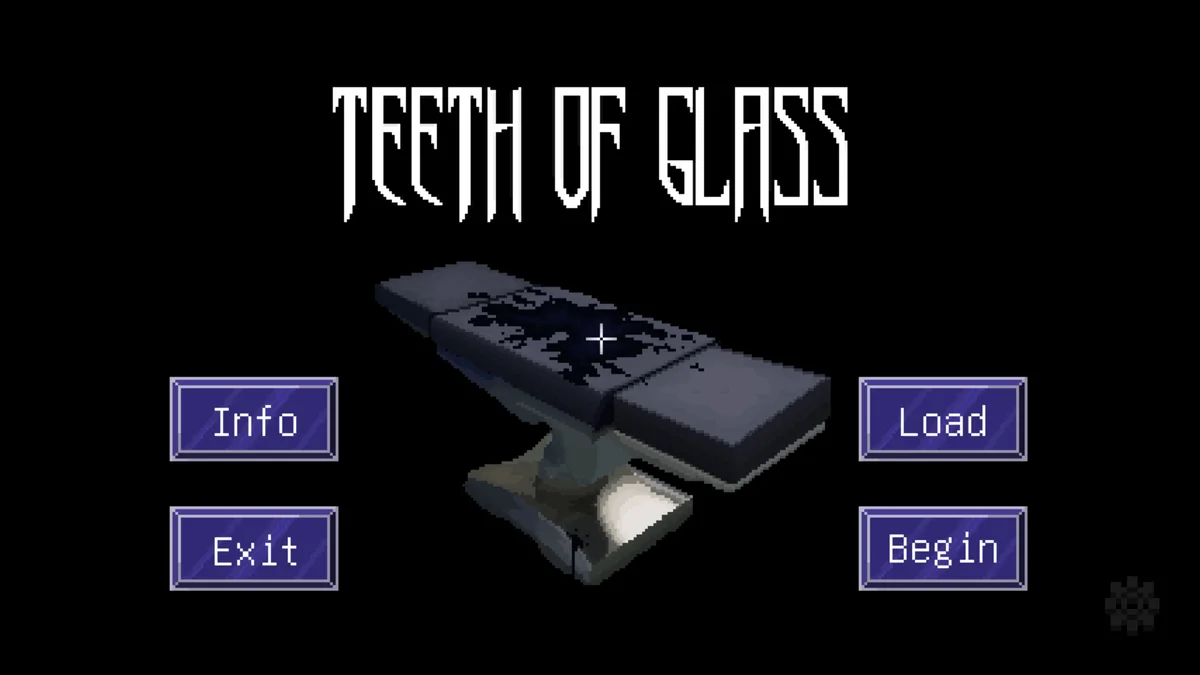
Teeth of Glass is the pick when you want atmosphere and a concrete mystery
Teeth of Glass begins with one cut and follows Doctor Joshua Hagstrom into an otherworldly fever dream. It is a short point-and-click horror adventure with two endings, not an abstract gallery of unsettling images. You inspect rooms, reveal the inventory by moving the cursor to the top of the screen and work out where each object belongs. The mysterious patient, Joshua’s family and the question of escape give the nightmare a clear thread.
The game uses pixel art, body horror, disturbing imagery and jump scares. Those elements make it the heaviest item on this list even though its running time is compact. It suits a player who enjoys looking closely at a scene and carrying an unresolved clue for a few rooms. If you prefer a mechanical puzzle, choose Normal Maths; if you want the discomfort to come from a character relationship, choose one of the Harvey games. Teeth of Glass is for the moment when you want to enter a story and let the room stay unpleasant for a while.
Super Willie World 2 is odd without being horror
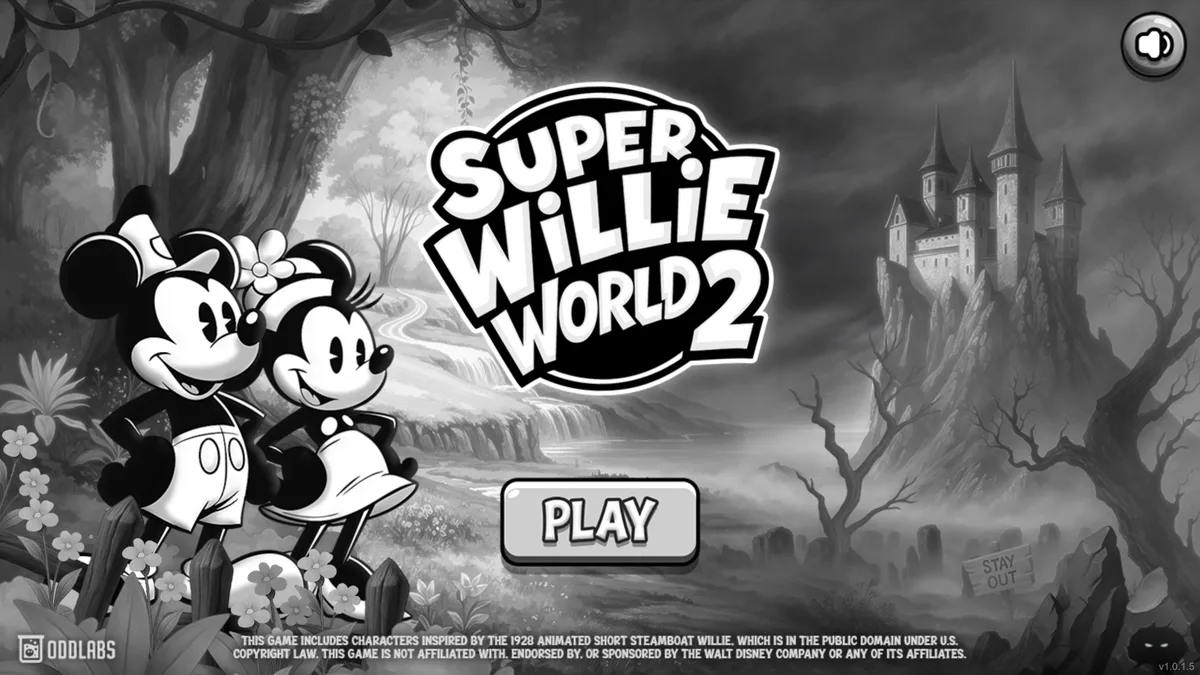
Not every weird game needs dread. Super Willie World 2 uses characters inspired by the public-domain 1928 Steamboat Willie short in an independent platforming adventure. Willie and Minnie set out to recover Pooh’s honey after the Mad Doctor and his Minions use it to create sticky monsters. The setup is a collision of familiar cartoon figures, but the actual game is straightforward: choose Willie or Minnie and clear 18 levels.
Arrow keys handle movement and jumping, while Z fires after you collect a power-up flower. Shining stars provide temporary invincibility. Those clear rules make it a good reset after the psychological games above. Its strangeness comes from the cast and honey-monster plot, not from hiding the objective. The creators also state that the game is not affiliated with Disney. If the rest of this list sounds too grim, start here and decide whether a public-domain cartoon rescue mission is weird enough for the evening.
A short way to choose your first tab
Start with the kind of uncertainty you enjoy. BLOODMONEY! and HUMAN EXPENDITURE PROGRAM make you uncertain about a decision. Normal Maths makes you uncertain about a rule. OrmBlok makes you uncertain about the field you are building. Teeth of Glass makes you uncertain about a room and a patient. Super Willie World 2 gives you the least uncertainty and the most direct movement.
The page for each game shows its goal, input and content note before anything loads. Use those details. A game does not become more interesting because you ignored a photosensitivity warning or began a keyboard platformer on a device without a comfortable keyboard. The right pick is the one whose main action sounds appealing now. Weirdness works best when it gives the player a sharper reason to continue, not when it turns choosing into homework.
 Play now