Choose the kind of pressure you actually want
Psychological horror is a broad label. In one game it means deciding how far to push a person for money. In another it means caring for that same person while a computer program keeps asking who owns whom. In Teeth of Glass, it means searching a fever dream while a doctor tries to understand a mysterious patient and return to his family. All three are horror, but they ask for different moods and different kinds of attention.
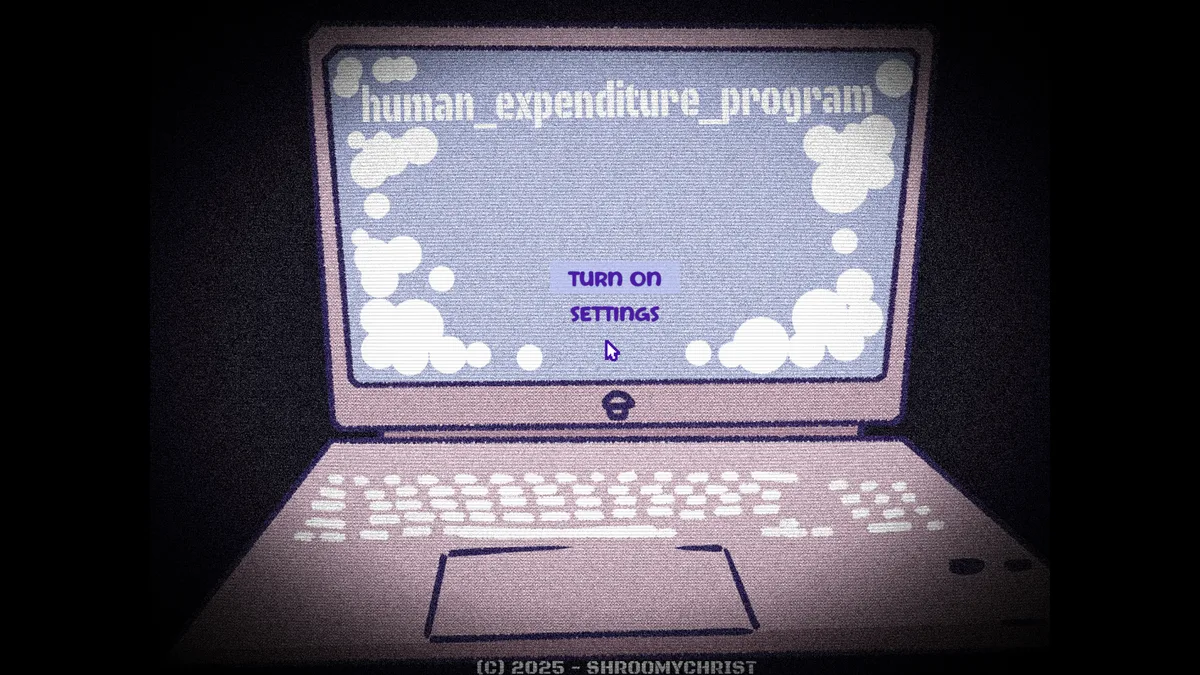
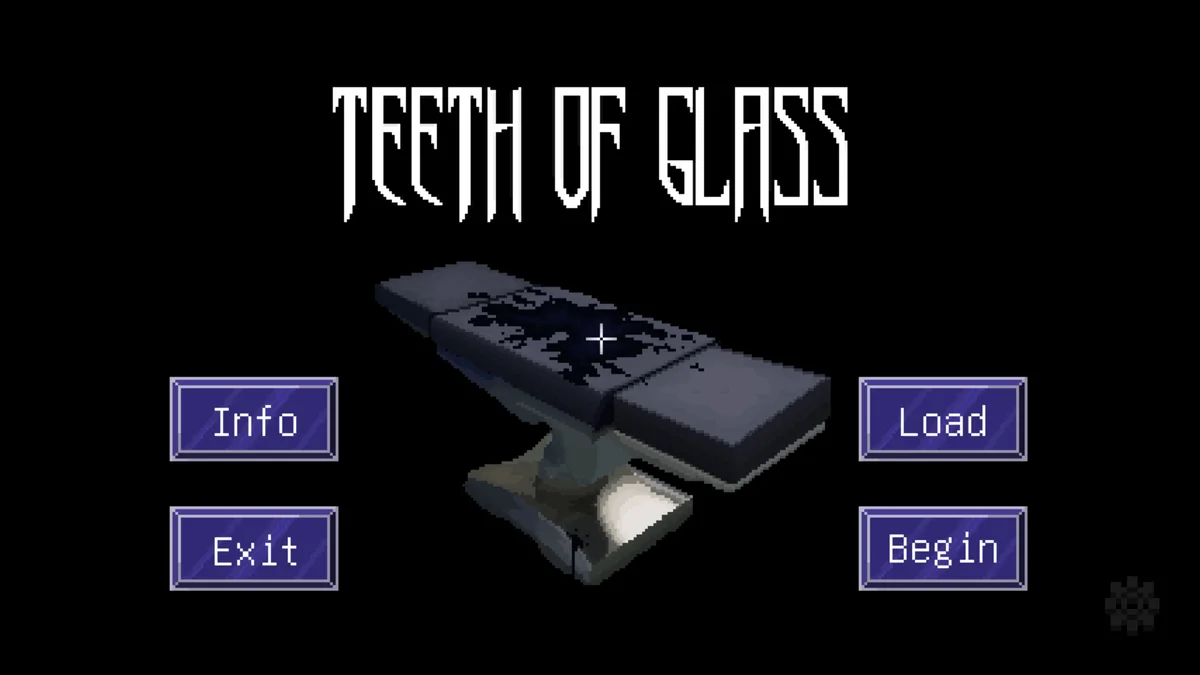
BLOODMONEY! is the easiest to control and the hardest to treat as morally neutral. HUMAN EXPENDITURE PROGRAM adds minigames, memory and virtual-pet routines. Teeth of Glass slows down and asks you to inspect rooms, use inventory items and sit with disturbing imagery. Before choosing, read the content note on the game page. The Harvey games warn about flashing lights and escalating distress; Teeth of Glass includes body horror, jump scares and unsettling scenes.
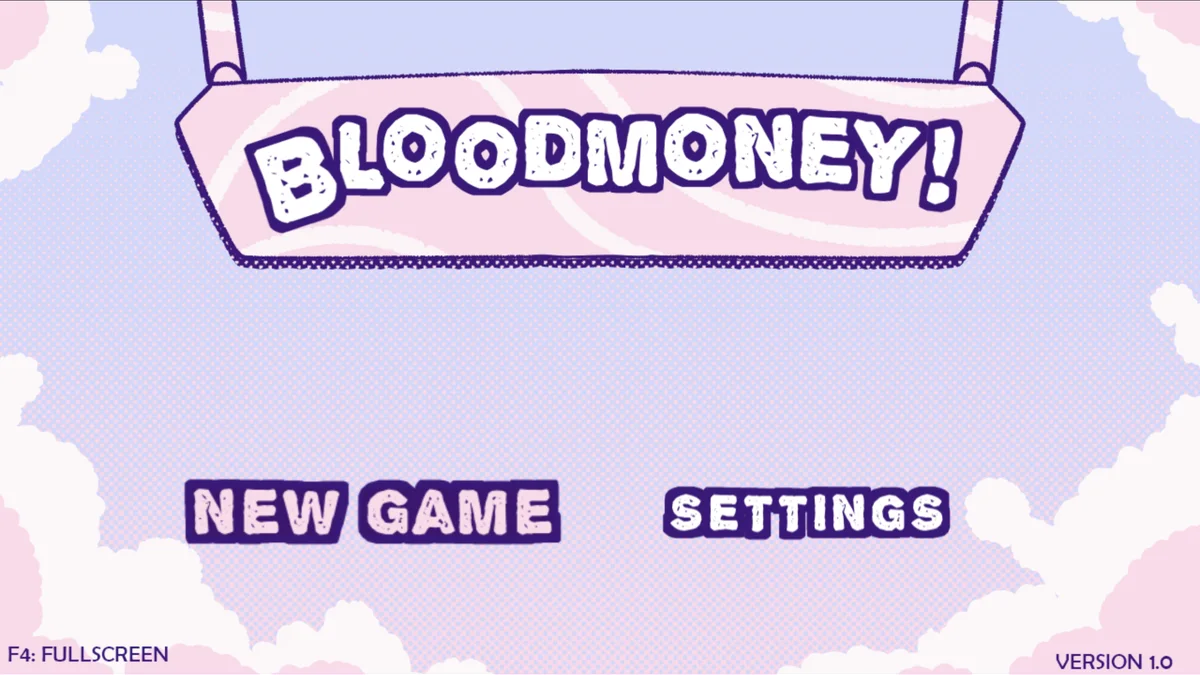
- Pick BLOODMONEY! for a compact moral-choice clicker with three endings.
- Pick HUMAN EXPENDITURE PROGRAM for a direct follow-up with five minigames and two endings.
- Pick Teeth of Glass for point-and-click exploration and two story endings.
BLOODMONEY! puts the uncomfortable decision in your hand
The premise starts with a medical emergency. You need $25,000 for an operation and meet Harvey Harvington beside the road. He offers one dollar every time you click him. It is a familiar clicker loop with an unusually human resource. When the shop begins selling tools that raise the value of each click by hurting Harvey, progress and cruelty become the same purchase.
The game does not need a complicated control scheme. The mouse is enough to earn money, buy a tool and advance the story. Nothing obscures who chose the next step. Harvey’s changing reactions and the clash between pastel colors and violence do the rest. Three endings make the amount of harm relevant, so the player can stop, escalate or return with a different plan. The original release places an average run around half an hour, which makes it suitable for one focused sitting rather than a long campaign.
Harvey turns an optimization problem into a personal one
A weaker version of this idea would depend entirely on shock. BLOODMONEY! keeps working because the financial target remains understandable. You can always see why a stronger tool is tempting. The game then lets Harvey’s personhood interrupt the optimization problem. A larger number does not erase the fact that the object being clicked speaks, reacts and remembers.
For a first run, avoid looking up the ending thresholds. The interesting part is noticing where your own limit appears when the interface keeps offering a faster route. If graphic harm is the only thing you expect from horror, the early cheerful exchanges may feel disarmingly slow. Give the bargain time to become ordinary. Buying everything as quickly as possible misses the more revealing question: does a clean economic goal change the way you describe an ugly action?
HUMAN EXPENDITURE PROGRAM asks what happens after the bargain
The follow-up commonly called BLOODMONEY 2 changes the format. Harvey is now contained inside the Human Expenditure Program, presented as a personal virtual pet who can be fed, played with and cared for. The official description sells that ownership as a benefit and promises that the player can make money. It also reminds you that Harvey may remember what happened before and suggests that forgetting would solve the problem.
That tension gives the sequel its own identity. The earlier game asks how much harm you will trade for progress; the follow-up asks what care means when the relationship begins with control. Five minigames break up the routine, and two endings respond to the path through the program. The game supports mouse and keyboard and is listed at about half an hour for an average session. Play it after BLOODMONEY! if possible, because its most pointed lines assume that you already know Harvey and cannot honestly call the past a blank slate.
The virtual-pet actions are part of the problem
Feeding or petting a character usually signals uncomplicated affection. Here those actions sit inside a program built around possession. Harvey depends on the person who controls the interface, and the player’s ability to care for him cannot be separated from the ability to decide everything else. That is a different kind of discomfort from the shop in BLOODMONEY!: quieter, more domestic and harder to dismiss as a single bad purchase.
Do not expect five minigames to turn the sequel into a light arcade collection. They give the player activities and money, but the story keeps returning to memory, responsibility and Harvey’s emotional state. The official page describes the burden of caring for a living human being with thoughts and emotions inside a computer. Take that description literally when deciding whether this is the right late-night game. It is short, but its subject is captivity dressed as ownership.
Teeth of Glass trades the moral ledger for a fever dream
Teeth of Glass begins with Doctor Joshua Hagstrom treating a mysterious patient and becoming trapped in an otherworldly nightmare. The central questions are direct: who is the patient, how can Joshua escape and will he see his family again? The game is a short point-and-click adventure with two endings, so progress comes from examining the environment rather than buying increasingly severe upgrades.
Use the mouse to inspect each scene and move the cursor to the top edge when you need the inventory. Small details matter. A useful object can be easy to overlook, and an item that seemed irrelevant may answer a problem several rooms later. The official description calls it a horror fever dream, and the game includes body horror, jump scares and disturbing imagery. Its pixel art does not soften those themes so much as leave space for the player to complete them.
Pick Teeth of Glass when you want to search rather than judge
The Harvey games keep returning the responsibility to the player’s choices. Teeth of Glass gives you a protagonist with a defined fear and a mystery that exists before you arrive. That makes it the better option when you want horror shaped like an adventure: enter a room, notice what is wrong, collect an item and move closer to an explanation.
It is still possible to become stuck, especially if you forget that the inventory hides at the top of the screen. When that happens, revisit the scene before seeking a full walkthrough. Check edges, objects with a distinct silhouette and places where a carried item could change the situation. The game has only two endings, but a second run can be faster because the item logic is no longer unknown. The replay is about choosing the other conclusion and seeing how the story’s emphasis changes.
How to set up a better horror session
Use headphones only if you are comfortable with sudden audio and keep the browser at a brightness that does not strain your eyes. More importantly, take the warnings seriously. Both Harvey games include flashing-light warnings. Teeth of Glass contains jump scares and body horror. If any of that is a poor fit tonight, choose a different shelf rather than trying to prove that a short game cannot affect you.
Once you start, give the game a few uninterrupted minutes. Psychological horror loses force when every uncomfortable pause is filled by another tab. BLOODMONEY! needs time for the click to change meaning. HUMAN EXPENDITURE PROGRAM needs time for care to become control. Teeth of Glass needs enough quiet for a room to feel suspicious. None requires a huge commitment, but each benefits from attention. Choose the form of pressure you want, read the note, then let the game do one specific thing well.
 Play now